The reason you wake at the same time every night is not random, not mysterious, and not a sign that something is wrong. It is the product of a precise biological system — your circadian rhythm and sleep architecture — running exactly as designed. Once you understand the system, the timing of your waking tells you exactly which stage of sleep you are in, what your body is doing at that moment, and — often — what your body is trying to tell you.
Sleep is not a single continuous state. It is a series of repeating cycles, each lasting approximately 90 minutes, cycling through four distinct stages: three stages of Non-REM sleep (light, deeper, and deep slow-wave sleep) and one stage of REM (Rapid Eye Movement) sleep. Each of these stages serves a different biological function — and the pattern of which stage you are in at any given hour of the night is remarkably consistent from person to person and night to night, determined by the precise orchestration of your circadian clock.
The Science
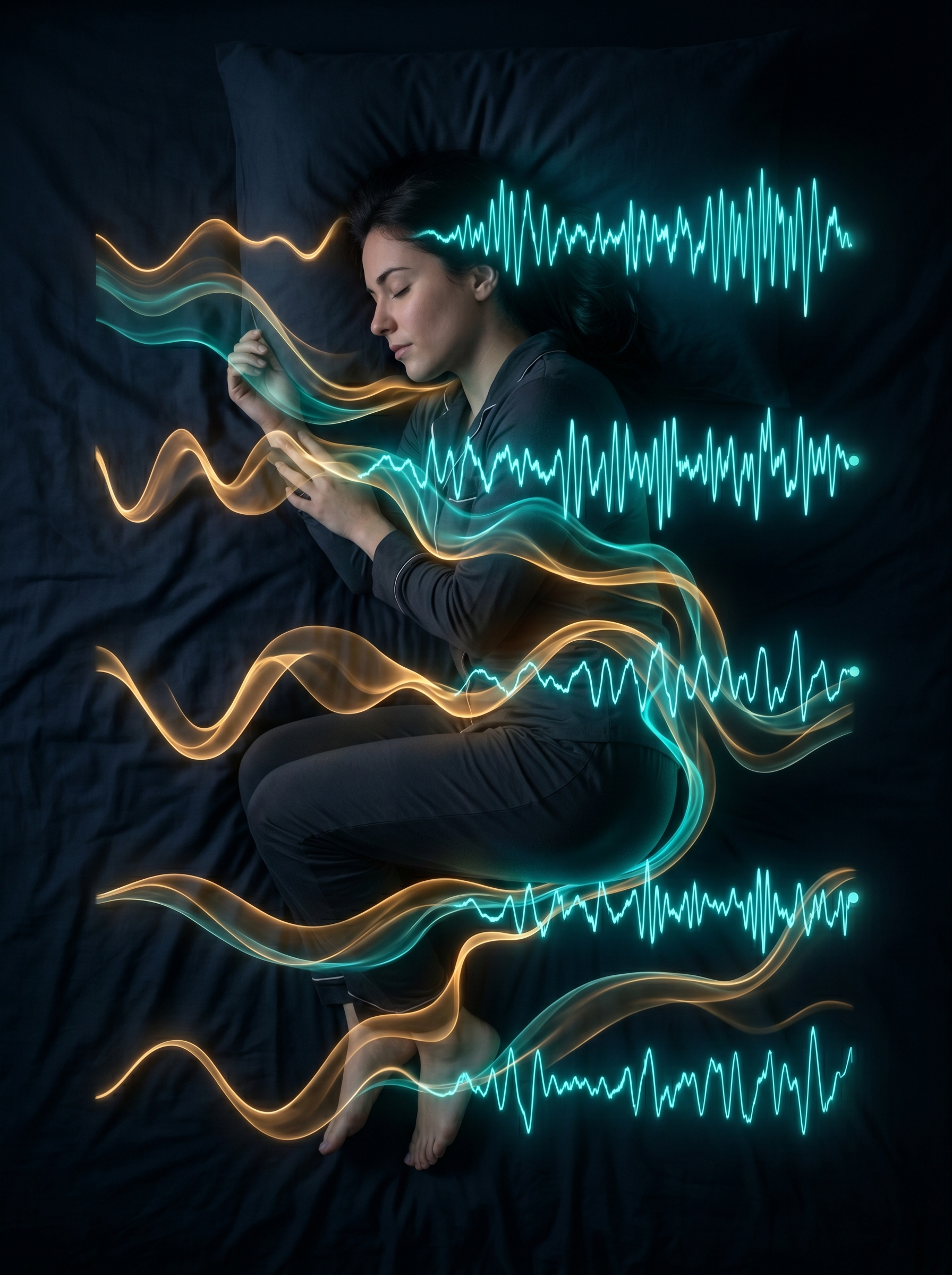
Sleep Cycles — How Your Body Runs the Night
90 Minute Cycles · NREM Stages 1 to 3 · Then REM · Repeating All Night · Your Body Runs This Precisely · Every Night
A typical night of 7-8 hours contains approximately 4-5 complete sleep cycles. In the first half of the night, the cycles are dominated by deep slow-wave sleep — the most physically restorative stage. In the second half of the night, REM sleep dominates — the stage associated with dreaming, memory consolidation, and emotional processing. This shift is the key to understanding why you wake at specific times.
🔬 A Complete Sleep Cycle — What Happens In 90 Minutes
Stage 1 (5 min): Light sleep. Easily woken. Hypnic jerks may occur. Stage 2 (25 min): Heart rate slows. Body temperature drops. Sleep spindles protect sleep. Stage 3 (30 min): Deep slow-wave sleep. Growth hormone released. Physical repair. Very hard to wake. REM (20 min): Brain highly active. Eyes move rapidly. Dreaming. Memory consolidation. Brief arousal (1-2 min): Nearly everyone wakes briefly between cycles — most people do not remember it unless they remain awake for more than 2-3 minutes. The brief arousal between cycles is when you notice you have woken up. Whether you fall back to sleep or stay awake is determined by what your body is doing at that precise moment.
Your Wake Time
What Each Time Is Telling You — Exactly
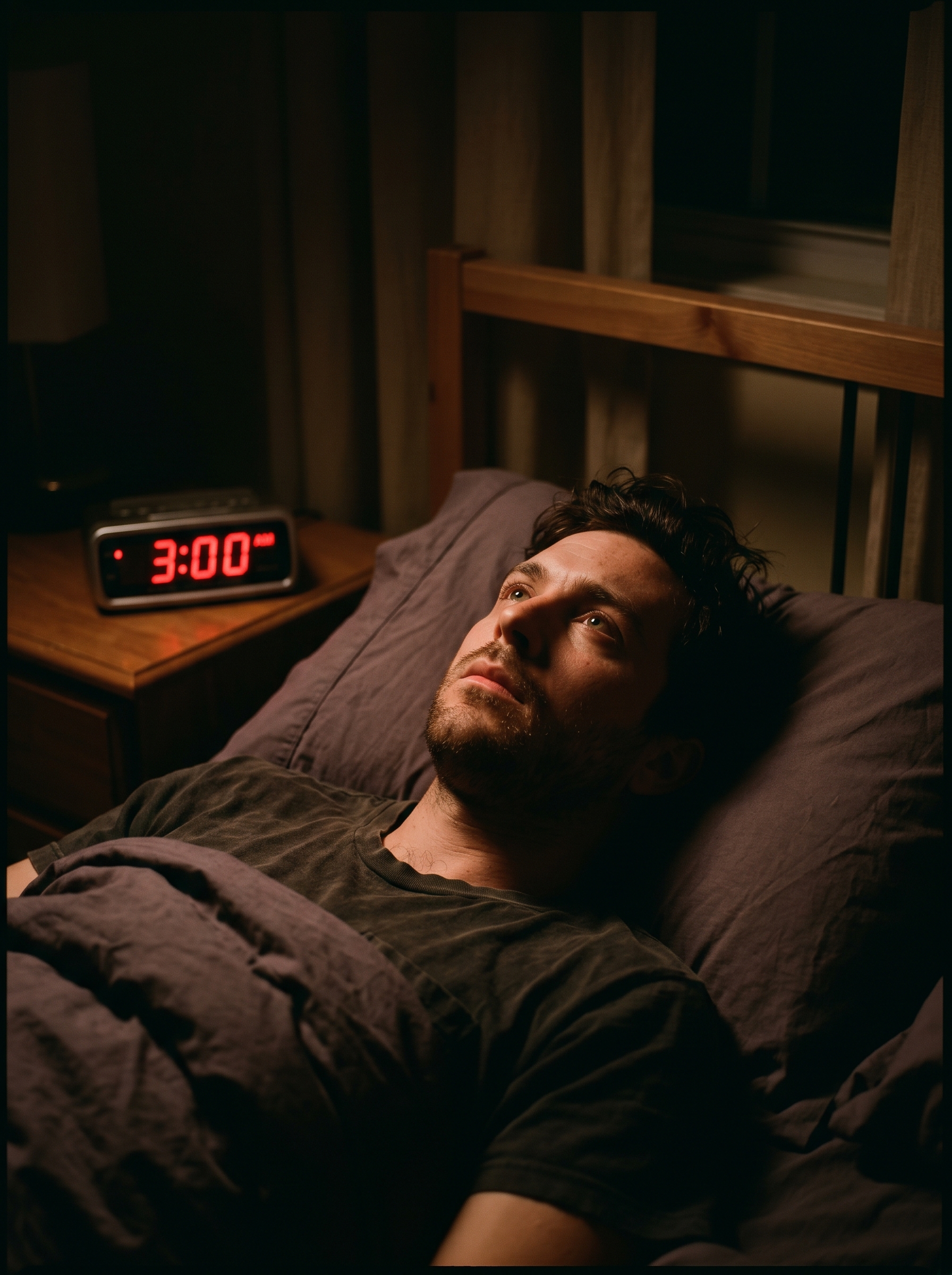
3AM · The Most Common Wake Time · The Specific Quality of This Darkness · Is Different From Every Other Hour
Waking at 1AM — Your First Cycle Has Ended
Waking at 1AM typically signals the end of your first 90-minute sleep cycle. At this point, your body has completed its first deep sleep phase and is transitioning. Common causes: alcohol consumed in the evening (disrupts second half of sleep), stress hormones, a full bladder, or environmental noise. Alcohol is the most common culprit — it sedates you into the first cycle but then disrupts all subsequent cycles as it metabolises, causing this specific 1AM wake pattern.
Waking at 2AM — Deep Sleep Is Ending, REM Begins
Waking at 2AM marks the end of your second cycle — when the body's deep slow-wave sleep begins to reduce and REM sleep starts increasing. Common causes: anxiety and stress (which suppress REM sleep in early cycles, then produce a REM rebound effect), blood sugar fluctuations (the body secretes hormones around 2AM to prevent hypoglycaemia), and chronic pain (which worsens during light sleep phases). If you consistently wake at 2AM, examining your stress levels and evening eating patterns is the first step.
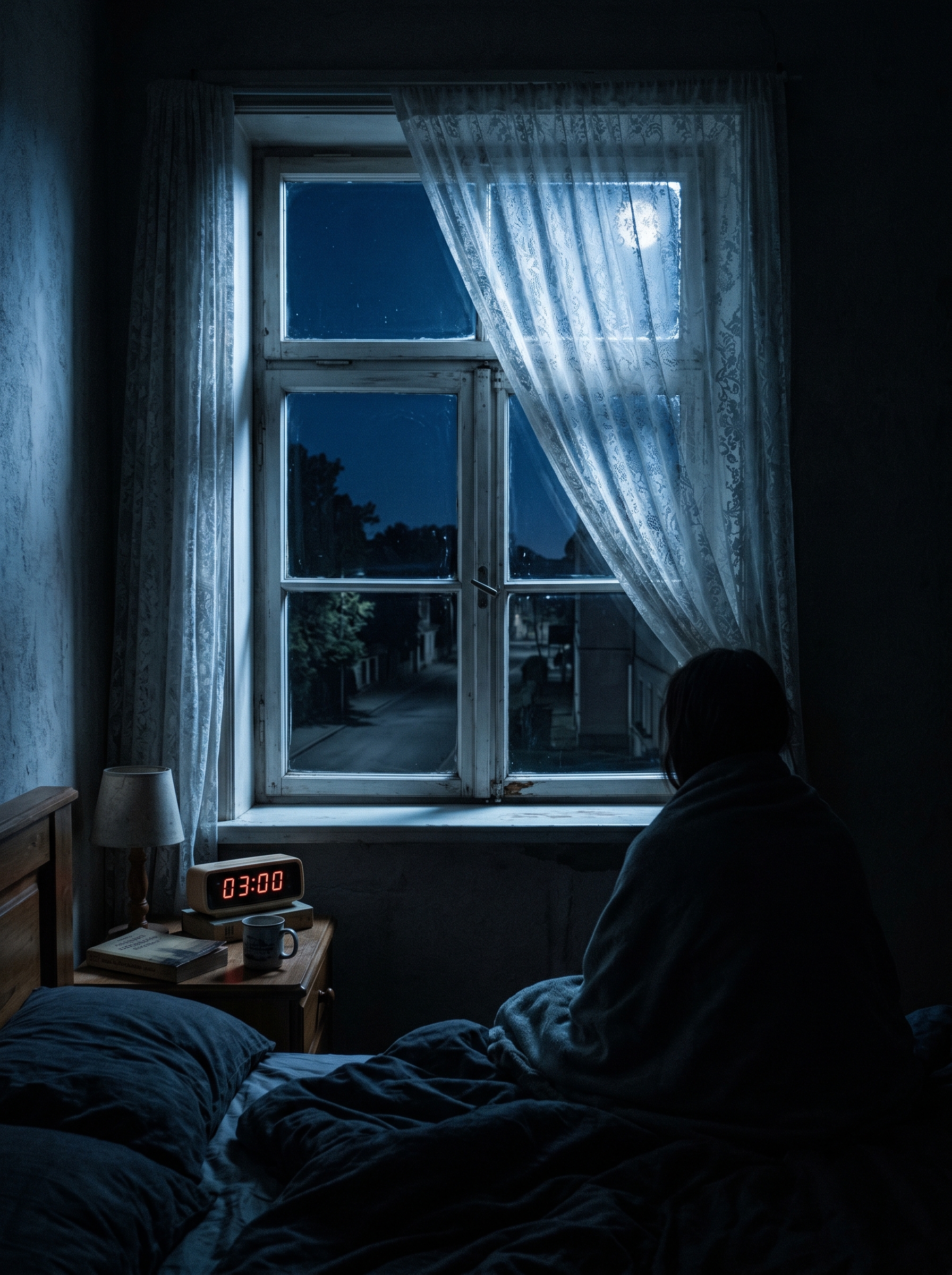
Waking at 3AM — The Most Documented Wake Time
3AM is the most commonly reported middle-of-night wake time globally, and science has identified why. Between 3AM and 4AM, the body undergoes a significant hormonal shift: cortisol production begins to rise (preparing you for the day), melatonin begins to decline, and body temperature starts to increase. This combination of changes creates a natural vulnerability in sleep continuity. In people with anxiety, depression, or elevated baseline cortisol, this window produces a reliable awakening — often accompanied by racing thoughts or a sense of dread that feels disproportionate to its actual cause. The 3AM dread is real — and it is biochemical, not psychological.
Waking at 4AM — Cortisol Is Rising, REM Is Dominant
Waking at 4AM is the signature of the cortisol awakening response — a documented, normal physiological process in which cortisol rises sharply in the hour before anticipated waking time. In people under chronic stress, this cortisol rise begins earlier and is sharper, causing them to wake before they intended to. 4AM wakers are often people in high-stress situations, people who wake early for work, or people whose circadian rhythm has shifted earlier with age. Early morning awakening (4AM or earlier) is also one of the most consistent neurobiological markers of clinical depression and should be discussed with a doctor if persistent.
The Mechanism
Why It Happens at Exactly the Same Time
The Biological Clock · Visible in Every Cell · Suprachiasmatic Nucleus · 24 Hour Precision · Your Body Has Known the Time All Along
🕐
Circadian Clock
The Suprachiasmatic Nucleus — Your Master Clock
Located in the hypothalamus, the suprachiasmatic nucleus (SCN) is a cluster of approximately 20,000 neurons that acts as the master clock for every biological process in your body. It runs on a 24-hour cycle, synchronised primarily by light exposure, and coordinates the timing of hormone release, body temperature, sleep pressure, and hundreds of other physiological processes with remarkable precision — to within minutes, night after night.
🌡️
Body Temperature
Core Temperature Dip — Why Deep Sleep Happens First
Your core body temperature follows a precise 24-hour cycle, falling by approximately 1°C in the hours after sleep onset and reaching its minimum around 4-5AM before rising again. Deep slow-wave sleep is most easily achieved at the lowest body temperatures — which is why it dominates the early part of the night. As temperature rises toward morning, deep sleep becomes physiologically more difficult, and REM sleep takes over.
⚡
Adenosine
Sleep Pressure — The Chemical That Makes You Tired
Adenosine is a chemical that accumulates in the brain throughout the day, building "sleep pressure." It is what caffeine blocks — temporarily. During sleep, adenosine is cleared. By the middle of the night, adenosine levels have dropped significantly, reducing sleep pressure and making it easier to remain awake if woken. This is why middle-of-night wakings are harder to return from than early-night wakings: the biological drive to sleep has partially discharged.
🧪
Cortisol
The Stress Hormone That Wakes You Before Your Alarm
Cortisol follows a precise daily rhythm: lowest at midnight, beginning to rise around 3-4AM, peaking approximately 30 minutes after normal waking time. This "cortisol awakening response" is partly responsible for waking you up — but in people under chronic stress, the curve rises earlier and more steeply, causing pre-dawn awakening. Cortisol at 3AM is not a sign of stress — cortisol at 3AM that prevents return to sleep usually is.
"Sleep is not a passive state. It is one of the most active, precisely orchestrated biological processes in your body — and when it breaks, it breaks at predictable points, for predictable reasons, that tell you exactly what your body is doing."
— Matthew Walker · Professor of Neuroscience · UC Berkeley · Why We Sleep · 2017
How to Fix It
The Solutions
How to Stop Waking Up — Verified Methods
Fix your sleep schedule before anything else. The single most powerful intervention for middle-of-night waking is a consistent wake time — the same time every day, including weekends, regardless of how well you slept. This anchors your circadian rhythm, which stabilises all downstream hormonal and temperature cycles. An inconsistent wake time produces inconsistent sleep architecture — which produces inconsistent wake times at night. The fix begins with the morning, not the night.
Eliminate alcohol within 3 hours of sleep. Alcohol is the most common cause of 1AM and 2AM waking and one of the most underrecognised sleep disruptors in the population. It sedates you into sleep but suppresses REM sleep and produces a rebound effect as it metabolises — exactly 3-4 hours after consumption — causing a sharp, cortisol-driven awakening. The feeling of sleeping well after drinking is not sleep quality — it is sedation. The difference becomes measurable on a sleep tracker within two weeks of abstaining.
Manage cortisol at its source — not at bedtime. If you consistently wake at 3-4AM with racing thoughts, the cortisol driving that awakening was produced by stress that occurred during the day. Evening wind-down routines help, but the more effective intervention is managing daytime stress: regular exercise (which reduces baseline cortisol), consistent eating times (which stabilise blood sugar, a cortisol trigger), and deliberate decompression practices during the day rather than only at bedtime.
Do not lie in bed awake for more than 20 minutes. If you wake at night and cannot return to sleep within 20 minutes, leaving the bed and doing something calm in low light — reading, gentle stretching, quiet sitting — is more effective than lying awake in frustration. The association between bed and wakefulness becomes a self-reinforcing cycle. Leaving the bed breaks the cycle and resets the association between the bed and sleep. Return only when you feel genuinely sleepy.
See a doctor if early morning awakening is persistent. Waking consistently before 5AM and being unable to return to sleep — particularly when accompanied by low mood, low energy, or reduced interest in usual activities — is one of the most consistent signs of clinical depression and should be discussed with a healthcare professional. This is not anxiety or lifestyle — it is a neurobiological pattern with effective treatments. Understanding the difference between disrupted sleep and a symptom of depression is one of the most important things this article can offer.