Acute stress — the kind that lasts minutes or hours — is not the problem. It was designed for you. It sharpens focus, mobilises energy, and saves lives. Chronic stress — the kind that never fully resolves, that runs as a background programme for months or years — is a different category of experience entirely. It is not a feeling. It is a physiological state that systematically damages every major organ system in the human body, accelerates cellular aging, and shortens life. The science documenting this is not new. The scale of it is still not fully understood by most people living under it.
The "kill switch" is not a metaphor. It is the accumulated effect of the body's stress response — designed for short-term emergency use — running continuously in an environment that never fully signals safety. Every hour the system runs in emergency mode is an hour it is not running in maintenance mode. Repair, regeneration, immune surveillance, memory consolidation, cellular cleanup — all of these processes are suppressed when the stress response is active. The body makes a biological trade: immediate survival at the cost of long-term health. Run that trade for years and the cost becomes measurable in the structure of the brain, the length of DNA, and the health of the heart.
What Stress Actually Does
Five Systems · Five Documented Damages
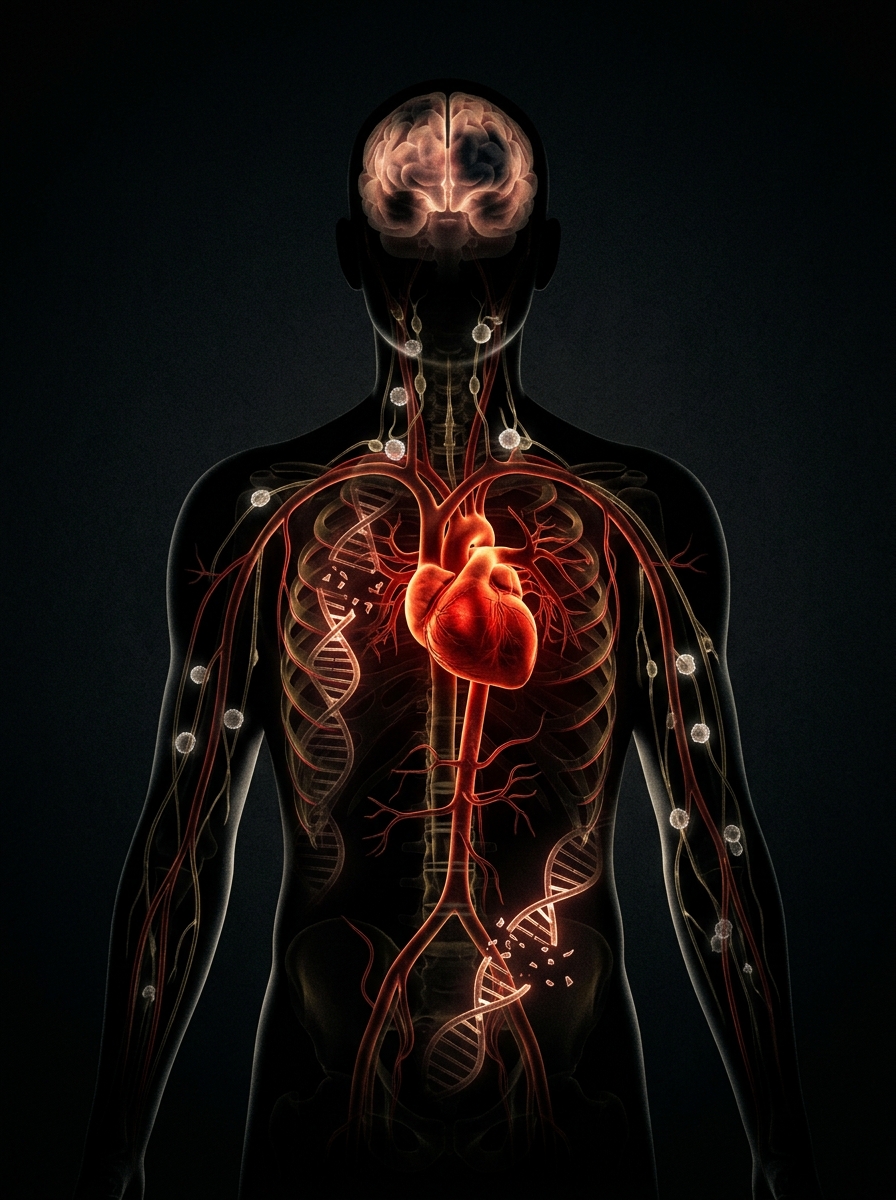
Inside The Body · Under Chronic Stress · Every System · Simultaneously Damaged · The Kill Switch · Pressed Daily
🧠
Brain · Hippocampus
Stress Physically Shrinks the Brain
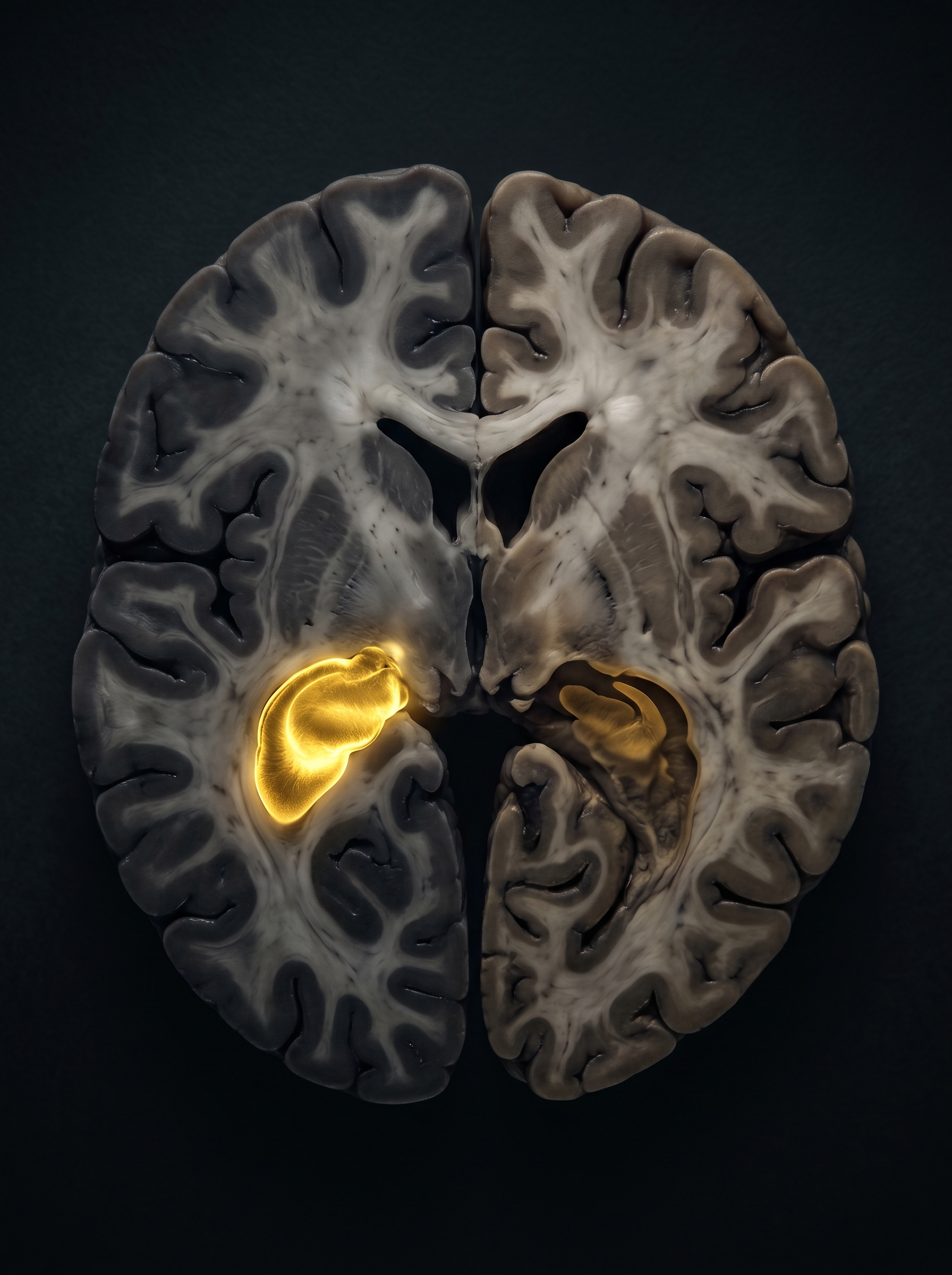
Chronic cortisol exposure causes measurable reduction in hippocampal volume — the brain region responsible for memory, learning, and emotional regulation. Studies using MRI show that people with chronic stress and depression have hippocampi up to 20% smaller than controls. Cortisol also suppresses neurogenesis — the growth of new brain cells — in the hippocampus. The damage is structural, not functional. The brain is physically smaller.
🧬
DNA · Telomeres
Stress Ages Your DNA — Measurably, Rapidly
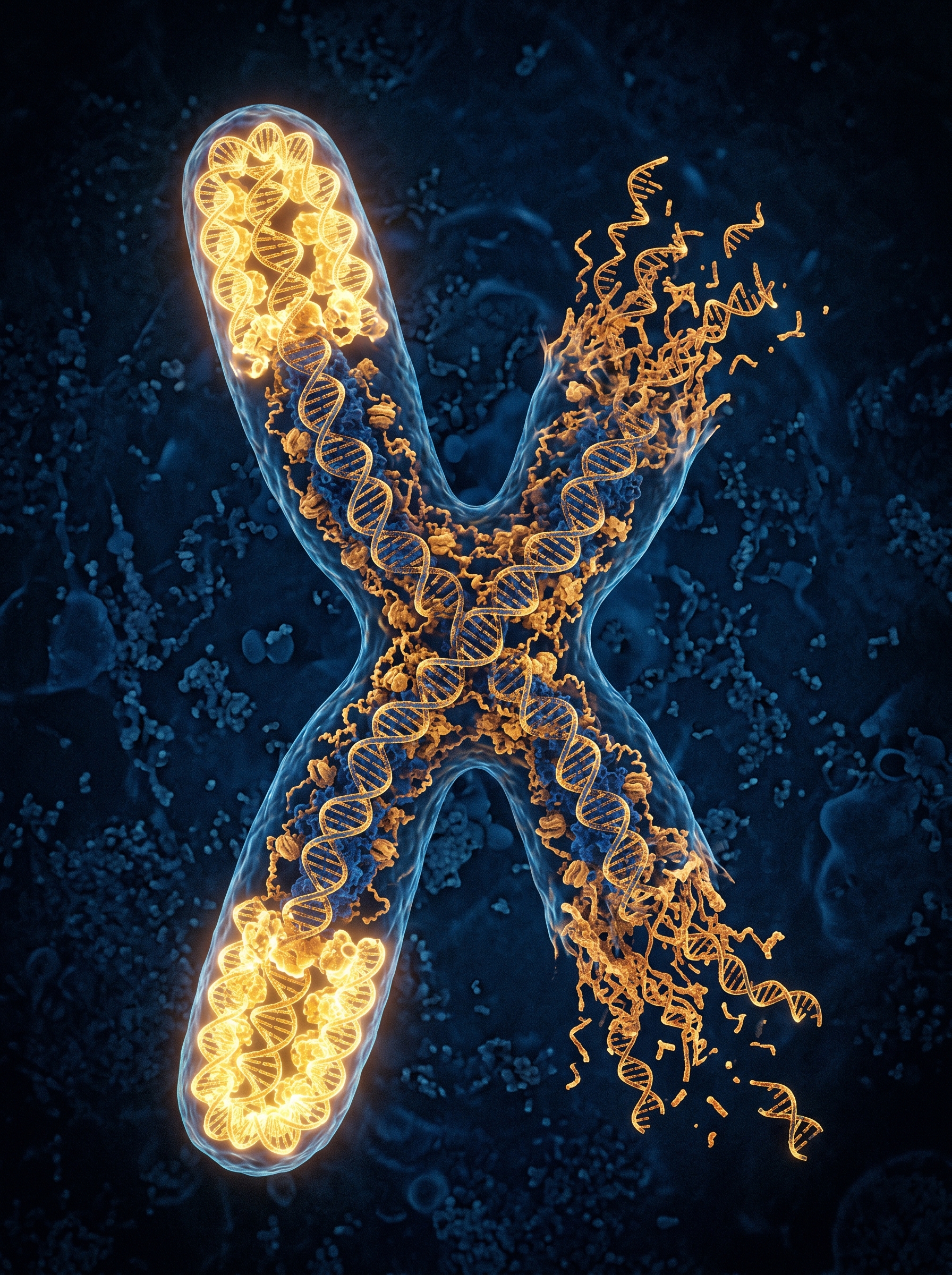
Telomeres — the protective caps on chromosome ends that shorten with each cell division — shorten faster under chronic stress. Research published in PNAS found that highly stressed caregivers had telomeres equivalent to people 9-17 years older than their chronological age. Shorter telomeres = faster biological aging, higher cancer risk, reduced lifespan. Stress does not just feel aging. It produces it at the molecular level.
❤️
Heart · Cardiovascular
Stress Inflames and Hardens the Arteries
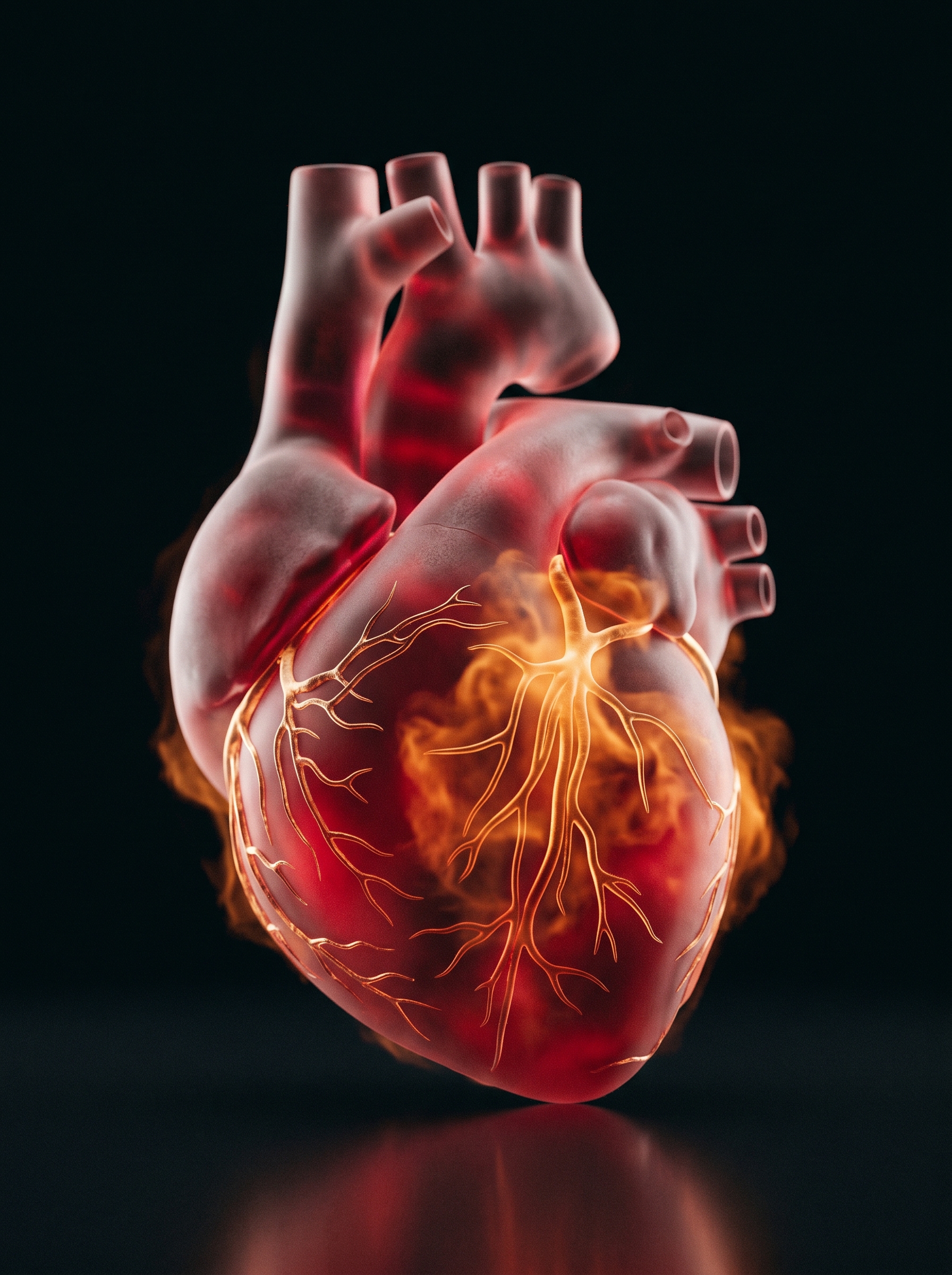
Chronic cortisol and adrenaline exposure produces sustained inflammation of arterial walls, accelerates the formation of atherosclerotic plaques, raises baseline blood pressure, and increases clotting factors. The American Heart Association now lists chronic psychological stress as an independent risk factor for cardiovascular disease — equivalent to smoking in its effect on long-term cardiac health. The heart under chronic stress is a heart aging faster than its owner.
🛡️
Immune · Defence
Stress Disables the Body's Defence System
Cortisol is a powerful immunosuppressant — which is why synthetic cortisol (prednisone) is used to suppress inflammatory conditions. Under chronic stress, natural killer cell activity decreases, T-cell proliferation is suppressed, and the body's ability to mount effective responses to both pathogens and developing cancer cells is compromised. This is why chronically stressed people get sick more often, heal more slowly, and have higher long-term cancer risk.
🫃
Gut · Microbiome
Stress Destroys the Second Brain
The gut contains 500 million neurons and produces 95% of the body's serotonin. Chronic stress disrupts gut motility, alters the composition of gut bacteria toward inflammatory species, increases intestinal permeability ("leaky gut"), and suppresses the production of the neurotransmitters the gut sends to the brain. The gut-brain axis runs both directions: chronic stress damages the gut, and the damaged gut sends distress signals back to the brain, amplifying anxiety and depression.
The Timeline
How Fast the Damage Happens
Left: Healthy Brain · Right: Chronically Stressed Brain · Same Person · Different Life · The Damage Is Structural · Measurable · Real
Minutes → Hours
Acute Stress Response — Designed, Useful, Temporary
Cortisol and adrenaline release. Heart rate increases. Blood pressure rises. Digestion suppresses. Immune function temporarily suppresses. Focus narrows. Designed to resolve within 20-60 minutes. In a healthy stress response, the parasympathetic system then activates — lowering cortisol, restoring digestion, resuming immune function, returning heart rate to baseline. This is the system working correctly.
Days → Weeks
Early Chronic Stress — Sleep Disruption and Inflammation Begin
Cortisol baseline rises. Sleep architecture disrupts — less deep sleep, more awakenings. Inflammatory markers (CRP, IL-6) begin to elevate. Memory consolidation impairs. Gut bacteria composition begins to shift. Immune response to pathogens begins to weaken. These changes are reversible at this stage with adequate rest and stress reduction.
Months
Structural Changes Begin — Brain and DNA
Hippocampal neurogenesis measurably suppresses. Telomere shortening accelerates to rates 2-3x normal. Arterial inflammation becomes chronic. Gut microbiome diversity reduces significantly. Prefrontal cortex grey matter begins to thin. These changes require active intervention to reverse and some are partially permanent.
Years
Irreversible Damage — The Kill Switch Has Been Held Down
Hippocampal volume measurably reduced on MRI. Telomere length equivalent to 10-17 years older than chronological age. Cardiovascular disease risk equivalent to decades of smoking. Immune competence significantly compromised. The damage at this stage is not fully reversible — but its progression can be halted and partially ameliorated with the right interventions.
9 yrs
Biological Age Added by Chronic Stress — Measured in Telomere Length
A landmark study in PNAS measured telomere length in mothers caring for chronically ill children — one of the most sustained stress conditions documented. Their telomeres were equivalent to women 9 to 17 years older than their chronological age. This is not a risk factor or a prediction. It is a measurement of what chronic stress had already done to their DNA. Their bodies were aging at up to twice the normal rate. The stress was not metaphorically killing them. It was literally doing so, at the molecular level, measurably.
Telomeres · Long: Healthy · Short: Stressed · The Molecular Clock · Of Every Life That Has Ever Been Chronically Stressed · Yours Included
The Heart · Under Chronic Cortisol · Arteries Inflaming · Plaques Forming · The Body Paying The Price · Of Years Of Unresolved Stress
"Stress is not just a feeling. It is a physiological state that, when chronic, is indistinguishable in its biological effects from slow poisoning. The body was not designed to run in emergency mode indefinitely. When it does, it breaks."
— Robert Sapolsky · Professor of Neuroscience · Stanford University · Why Zebras Don't Get Ulcers
The Off Switch
How to Stop It
Turning Off the Kill Switch — What Science Confirms Works
Physiological sigh — the fastest stress response interrupt available to a human being. A double inhale through the nose followed by a long, extended exhale activates the parasympathetic nervous system within seconds. This is the fastest way known to biology to lower acute cortisol and heart rate. Practised for 5 minutes daily, it produces measurable reductions in baseline anxiety and cortisol within two weeks. It requires no equipment, no training, no time away from your environment. It can be done anywhere.
Exercise — the most documented anti-stress intervention in the scientific literature. Even 20 minutes of moderate aerobic exercise reduces cortisol, increases BDNF (which protects and regenerates hippocampal tissue), and produces anti-inflammatory cytokines that counteract stress-induced inflammation. Regular exercise is the only intervention documented to partially reverse hippocampal volume loss from chronic stress. It is not a lifestyle choice. It is medication for a stressed nervous system, with better evidence than most pharmaceuticals for this condition.
Social connection — the most underrated biological stress buffer. Physical presence with safe people activates the release of oxytocin, which directly inhibits cortisol and activates the parasympathetic system. Loneliness, by contrast, maintains cortisol elevation at levels comparable to chronic stress itself. The research is unambiguous: social connection is not emotionally nice to have — it is physiologically necessary for stress regulation, and its absence is as damaging to health as the stress it fails to buffer.
Sleep — the only time the brain clears the waste products of stress. During deep slow-wave sleep, the glymphatic system clears cortisol metabolites, inflammatory debris, and cellular waste from the brain. This process cannot occur adequately in fewer than 7-8 hours. Every hour of sleep deprivation compounds the effects of stress — raising cortisol baseline, impairing immune function, accelerating telomere shortening. Sleep is not recovery from stress. It is the mechanism through which stress damage is repaired. Without it, the damage accumulates continuously.
Nature exposure — one of the most robustly documented cortisol reducers in the research. Studies consistently show that 20 minutes in natural environments — not exercise, simply presence — reduces cortisol by measurable amounts. The effect is stronger with more natural elements: trees, water, birdsong, uneven ground. Urban environments maintain cortisol elevation through noise, visual complexity, and social density. Natural environments produce the opposite signal: that the environment is not threatening. The parasympathetic system responds accordingly.