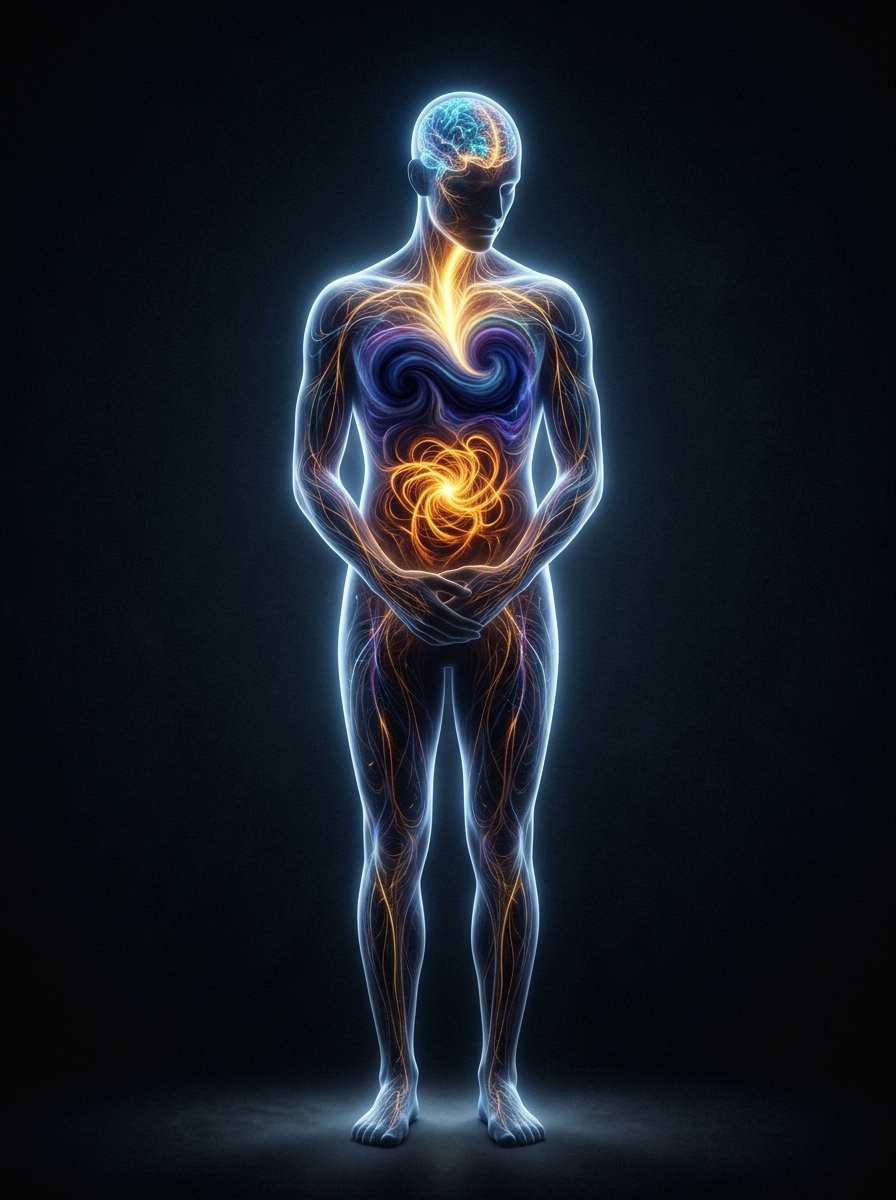
Bessel van der Kolk spent thirty years studying what happens to the human body under experiences of overwhelming stress, loss, and trauma. His conclusion — published in one of the most influential books in the history of psychology — was not what the field expected: trauma is not primarily stored in memory. It is stored in the body. In the nervous system. In the patterns of tension, posture, and physiological response that persist long after the event that created them is over.
The phrase "the body keeps the score" has entered common language. But its meaning — the precise, documented, neuroscientific mechanism by which the body records what the mind has experienced — is almost never fully explained. This is that explanation. Not as a metaphor. As a biological fact that has been measured, documented, and now treated therapeutically in thousands of clinical settings globally. Your body has been recording your life. Understanding what it has written — and where — changes what becomes possible.
Chapter 01 · The Science
How the Body Records What Happens to It
Grief In The Chest · Fear In The Stomach · Joy In The Throat · The Body Knows Where Everything Is Stored · Always Has
When the brain perceives a threat — physical danger, emotional overwhelm, relational rupture — it activates the autonomic nervous system in one of three responses: fight, flight, or freeze. Stress hormones flood the body. Heart rate increases. Muscles tense. Breathing shallows. These responses were designed to be temporary — to mobilise the body to respond, then return to baseline when the threat passes.
But when the threat is overwhelming, unresolvable, or repeated — when there is no escape, no victory, no resolution — the nervous system becomes stuck in activation. The mobilisation response that was meant to be temporary becomes the body's resting state. The muscles that tensed in response to the threat never fully release. The breath that shallowed never fully deepens. The vigilance that arose never fully settles. The event is over. The body's response to it is not.
🔬 The Neuroscience — Where It Is Actually Stored
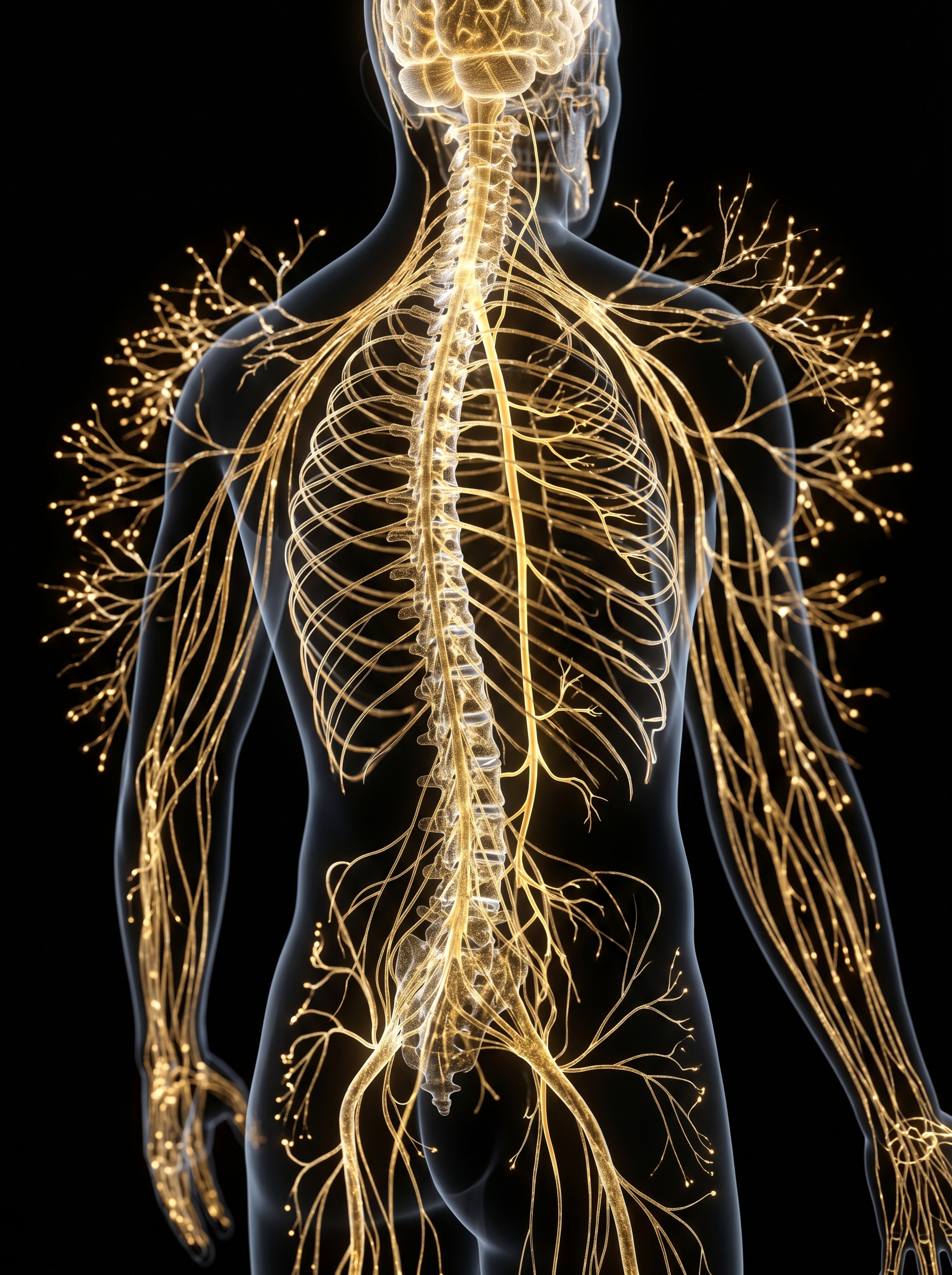
The amygdala — the brain's threat detection centre — stores the emotional memory of overwhelming experiences in a form that bypasses the hippocampus (which creates narrative memory). This is why trauma memories often feel more like a physical sensation than a story you can tell. The vagus nerve — the longest nerve in the body, running from the brainstem through the heart, lungs, and digestive system — carries the physiological signature of unresolved threat throughout the body. Fascia — the connective tissue that surrounds every muscle — holds patterns of tension that were established in response to past experience and persist independently of conscious memory. The body remembers what the mind has processed away.
Chapter 02 · Where It Lives
The Body Map — What Is Stored Where
The Vagus Nerve · The Body's Memory Highway · Running From Brain Through Heart Through Gut · Carrying Everything · Always
🫁
Chest · Shoulders
Grief, Loss, and Unexpressed Sorrow
Chronic grief and unexpressed sadness manifest most consistently in the chest and shoulders — a hunching forward, a protective curvature, a compression of the sternum that is the body's physical enactment of the emotion "collapse." Research shows that people asked to adopt this posture report increased feelings of sadness. The relationship runs both directions. The posture produces the feeling. The feeling produces the posture.
🪨
Jaw · Neck · Throat
Anger, Words Never Said, Boundaries Never Set
The jaw is one of the body's primary sites of suppressed anger — clenched during sleep, tensed during conflict, locked during situations where rage was felt but not expressed. The throat stores the words that were swallowed — the responses that were not given, the truths that were not spoken, the boundaries that were not set. Chronic jaw tension and neck tightness frequently map to histories of suppressed voice.
😰
Stomach · Gut
Anxiety, Fear, and Chronic Uncertainty
The gut contains approximately 500 million neurons and produces 95% of the body's serotonin — it is, in the most literal sense, a second brain. Chronic anxiety and unresolved fear produce measurable changes in gut motility, bacterial composition, and inflammatory markers — which is why anxiety is so consistently felt in the stomach, and why gut disorders and anxiety so frequently co-occur. The gut is not metaphorically connected to emotion. It is neurologically connected.
🦵
Hips · Lower Back
Stored Trauma and Unprocessed Overwhelm
The psoas muscle — the primary hip flexor, running from the lumbar spine through the pelvis to the femur — is sometimes called the "muscle of the soul" by somatic therapists because of its documented role in the freeze response. When the body enters freeze — the third trauma response after fight and flight — the psoas contracts. In people with unresolved trauma, this contraction becomes chronic. Lower back pain, hip tightness, and sciatica frequently have somatic components that respond to trauma-informed bodywork.
"Trauma is not what happens to you. Trauma is what happens inside you as a result of what happens to you. The body does not lie. It keeps the record even when the mind has decided to close the file."
— Gabor Maté · MD · Physician · Author · In the Realm of Hungry Ghosts · 2008
Chapter 03 · The Signs
How You Know the Body Is Still Keeping Score
The Hand Over Heart · Not Pain · Recognition · Something Is Stored Here · The Room Cannot See It · The Body Always Knows
80%
Of Chronic Pain Has a Somatic Component — Connected to Emotional History
Research published in the Journal of Psychosomatic Research found that up to 80% of patients with chronic pain conditions — fibromyalgia, chronic back pain, unexplained headaches, irritable bowel syndrome — show evidence of somatic components connected to unresolved emotional experience. The pain is real. The tissue damage is often minimal or absent. The nervous system is producing the pain as a signal that something unresolved remains in the body's memory. Treating the body without addressing the emotional history produces limited lasting results.
Chronic tension that returns regardless of physical treatment. Tight shoulders, a clenched jaw, a locked hip — tension that massage releases temporarily but that returns within days — is the nervous system re-establishing a pattern it has been holding, often for years or decades. The pattern is not in the muscle. It is in the nervous system that controls the muscle. Physical treatment of the muscle without nervous system regulation produces relief that does not last.
Emotional responses that feel disproportionate to the present situation. A reaction of terror to something mildly uncomfortable. A surge of rage at a minor slight. A collapse of composure at a moment that objectively does not warrant it. These disproportionate responses are the body's stored material — past experiences — being triggered by present circumstances that rhyme with them. The body is not responding to now. It is responding to then, through now.
Numbness, disconnection, or difficulty feeling the body. One of the most common — and most overlooked — signs that the body is holding unresolved material is the opposite of pain: numbness, dissociation, or a chronic sense of being cut off from physical sensation. The nervous system sometimes responds to overwhelming experience by dimming sensation itself — a protective anaesthesia that was adaptive in the moment of overwhelm and that can persist long afterward. The inability to feel the body is the body communicating that something required it to stop feeling.
Physical symptoms that have no clear medical explanation. Fatigue that persists through adequate rest. Digestive disturbance without dietary cause. Headaches without structural origin. Immune suppression that occurs in patterns connected to stress. The body produces these symptoms not as malfunction but as communication — the language through which the nervous system signals that its resources are being consumed by unresolved material that has not been processed.
The Release
Chapter 04 · The Path
How to Begin — What Actually Works
Not Collapse · Expansion · The Specific Posture · Of Something Finally Released · After Years Of Being Held
The most important understanding in somatic therapy is this: the body cannot be talked out of what it is holding. Cognitive approaches — understanding, reframing, making sense of experience — are valuable and necessary. They are not sufficient. The body holds its patterns at a level below conscious thought, and it releases them through approaches that operate at that same level: breath, movement, touch, regulation of the nervous system.
The specific approaches most supported by current research include: Somatic Experiencing (developed by Peter Levine), which works with the nervous system's activation patterns directly; EMDR (Eye Movement Desensitisation and Reprocessing), which uses bilateral stimulation to process stored traumatic material; yoga and mindful movement, which have documented effects on vagal tone and nervous system regulation; deliberate breathwork, particularly extended exhale breathing, which activates the parasympathetic nervous system; and safe, consensual touch, which regulates the nervous system through the oldest pathway available to mammals — physical co-regulation with another safe being.
None of these approaches require a diagnosis of trauma. All of them are relevant to any person whose body is carrying the weight of an unexamined history — which, to varying degrees, is every person who has lived. Beginning to listen to the body — to what it is tense around, what it responds to, what it has been holding — is itself a form of release. The body has been waiting to be heard. It has been keeping score not to punish, but to be understood.